
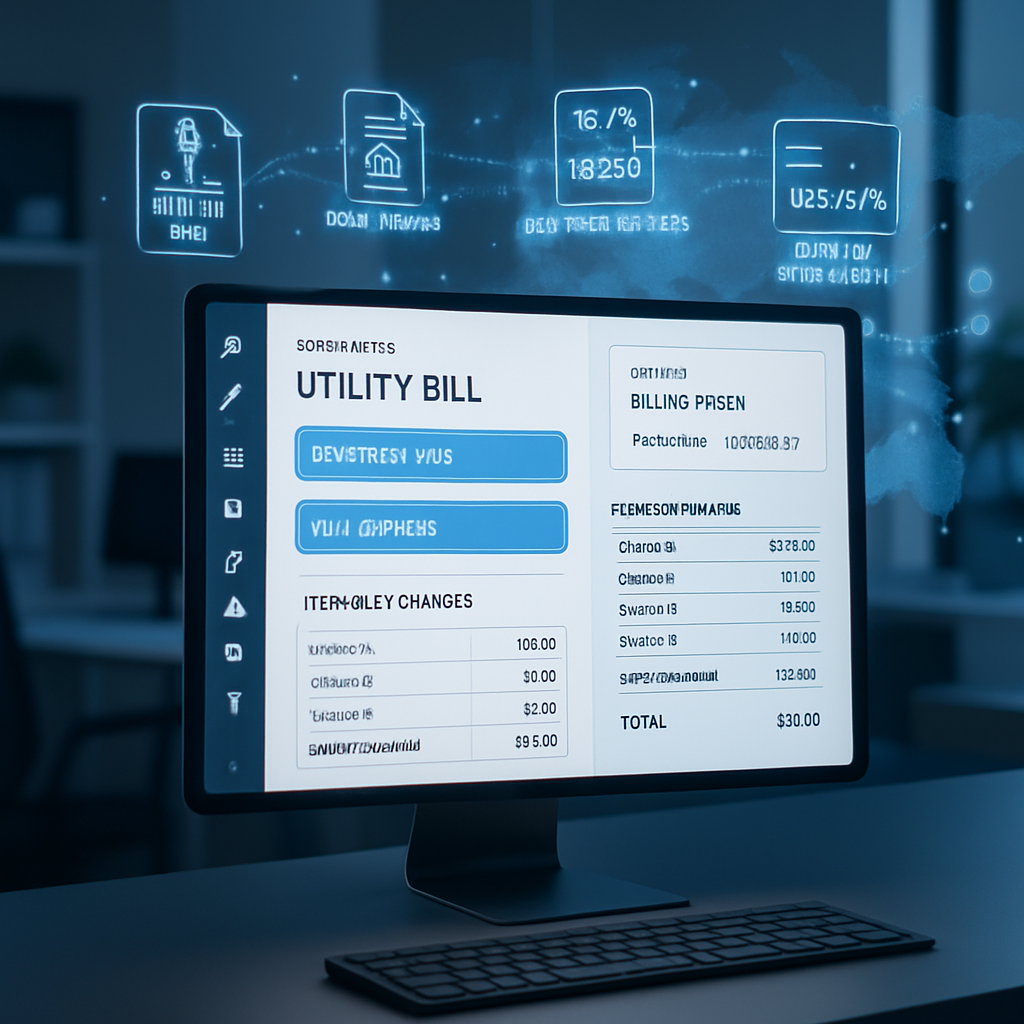
Creating accurate and professionally formatted utility bills for proof of address can be challenging when adapting to the diverse requirements across countries. Editable proof of address templates streamline this process by offering consistent design accuracy, quick customization, and clean exports in Word, PDF, or PSD formats. This flexibility ensures your documents align with various institutional standards while saving valuable time.
Understanding the range of acceptable proof of address documents—including bank statements, tenancy agreements, and government letters—is essential for effective preparation. Using editable templates tailored to regional differences also helps maintain recency and precision, reducing the risk of delays. Let’s explore how these adaptable solutions enhance global document readiness and simplify managing address verification utility bill formats.
These templates are intended for design practice, mockups, and film props; they are not substitutes for official documents.
Understanding the role of utility bills and other documents as proof of address is crucial for global verification needs. This article explores editable templates designed to simplify compliance with varying international standards.
- Recognize multiple acceptable documents: Besides utility bills, bank statements, government letters, and tenancy agreements can serve as proof of address depending on the jurisdiction.
- Adapt templates to regional variations: Customizing address proof templates to reflect local document standards ensures broader acceptance.
- Prioritize document recency and accuracy: Editable templates help maintain up-to-date, accurate information needed for verification processes.
- Streamline compliance with editable formats: Using adaptable templates reduces errors and accelerates document preparation for different institutions worldwide.
- Enhance verification readiness: Templates tailored to meet specific address verification criteria minimize rejection risks and delays.
- Leverage layered template features: Easily modify logos, dates, and details without disrupting the overall layout for quick customization.
- Understand common verification questions: Editable templates aid in addressing concerns about digital acceptance, document types, and format requirements.
Next, we will delve into designing effective editable address proof templates that align with global standards and institutional demands. These templates are intended for design practice, mockups, and film props; they are not substitutes for official documents.
Understanding Proof of Address Documents and Their Importance
What Constitutes Proof of Address?
Proof of address is a document verifying where a person resides, significantly impacting identification and administrative processes. Common types such as utility bills, bank statements, government letters, and tenancy agreements must display the individual’s full name, their complete address, and a recent date indicating document issuance. This combination ensures a valid connection between the resident and the address.
When preparing editable document templates, especially for utility bills or bank statements, incorporating clear, labeled placeholders for these data points is crucial. This enables swift customization while maintaining the structure needed for recognition.
Why Utility Bills Are Widely Used
Utility bills have long been favored globally because they recur periodically, reinforcing up-to-date residency data. Their inclusion of the account holder’s name, detailed service address, and billing information make them a trusted form of proof of address. Additionally, utility bills often contain official logos and contact information, lending authenticity that many institutions expect.
In editable templates designed for utility bills, emphasizing these elements through dedicated layers or sections can facilitate accurate, localized adjustments without compromising the document’s integrity.
Commonly Accepted Proof of Address Documents Around the World
Utility Bills
Utility bills come in diverse forms—electricity, water, gas, internet—and are typically accepted due to consistent formatting and frequent updates (monthly or quarterly). When creating generic or region-specific editable templates, designers should account for common elements while allowing modifications for locale-specific data such as currency symbols, language, and layout standards.
Bank Statements and Financial Documents
Bank statements are popular alternatives because they also confirm financial activity linked to an address. These documents include regular transactional data along with personal details and address verification. Editable document templates for bank statements should clearly separate sections for transaction history and personal information, with user-friendly input fields to adjust dates and figures.
Government Letters and Residence Certificates
Official government-issued letters, such as tax notifications or residence certificates, often fulfill proof of address requirements. Templates mimicking these documents should emphasize formal layout, official seals, and standardized font usage to enhance credibility while allowing customization for names, addresses, and dates.
Tenancy Agreements and Rental Contracts
Tenancy agreements serve as proof when detailing the tenant’s name, rental property address, landlord details, and contract dates. Editable templates for such agreements must include clearly demarcated sections for each element and formatting consistent with legal document standards, ensuring the final output is both professional and clear.
Regional Variations and Requirements for Proof of Address
Key Regional Differences in Document Formats and Accepted Types
Regional differences involve language, date and number formats, currency symbols, and even document layout preferences. For example, the U.S. typically prefers MM/DD/YYYY date formats, while many European countries use DD/MM/YYYY. Currency symbols may appear before or after numerical values depending on locale.
Editable templates should integrate locale-based conditional formatting or predefined style sets to allow rapid switching between regional standards. This practice minimizes rework and maintains professional appearance regardless of the end user’s area.
Recency and Validity Periods for Documents
Most institutions mandate that proof of address documents be current, often dated within the last 1-3 months to confirm ongoing residency. Editable templates can incorporate dynamic date fields or simple guides for users to update billing periods and issue dates quickly, facilitating compliance with these critical recency requirements.
Benefits of Using Editable Proof of Address Templates
Flexible Customization for Different Jurisdictions
Editable templates empower users to adapt documents by changing layout components, logos, textual details, and formatting styles to suit local rules and branding requirements. This adaptability is invaluable when producing documents across multiple countries or organizational contexts.
Saving Time with Pre-Formatted, Professional Layouts
Starting from expertly designed templates eliminates the hassle of constructing documents from scratch. Users benefit from consistently structured sections reducing formatting errors and maintaining professional quality, which would otherwise drain time and resources.
Enhanced Accuracy and Consistency
Layered designs and named fields within templates ensure that individual data changes—like updating an address or date—do not disrupt overall alignment or style. This results in documents that remain visually uniform and accurate across multiple uses, minimizing rejection risk due to formatting inconsistencies.
For a selection of customizable options, explore editable address proof templates in Word and PDF for straightforward tailoring.
How to Design Effective Editable Utility Bill Templates for Address Proof
Essential Elements to Include
- Header featuring an official-looking utility company name and logo
- Clearly labeled customer name and full service address fields
- Visible billing period start and end dates along with document issue date
- Itemized charges or usage data to add authenticity and detail
- Contact details such as customer service phone numbers and email addresses for branding and realism
Ensuring Compliance with Address Verification Standards
To improve acceptance rates, adhere to standard formatting principles: use legible, uniform fonts; consistent spacing; locale-correct date and currency formats; and maintain metadata visibility, such as invoice numbers or account IDs. Designing templates with these considerations reduces confusion during verification processes.
As a practical reference, the United Kingdom utility bill templates demonstrate regulatory-compliant layouts that seamlessly balance design and data requirements.
Legal & Ethical Use of Editable Utility Bill Templates
- These templates are designed strictly for educational purposes, graphic design, or as visual mockups and props for film and theater production.
- They are not valid substitutes for official documents in any legal, financial, or governmental context.
- Users should always comply with relevant laws and institution policies when handling address verification documents.
Tips for Maintaining Up-to-Date and Accurate Documents
Regularly Updating Date and Billing Period Fields
Utilizing the layers or fields within editable templates, users can swiftly alter billing periods, issue dates, and other time-sensitive data, ensuring documents always meet institutional freshness mandates.
Adapting Logos and Contact Details as Needed
Changing utility company logos and contact information is vital to match local providers or simulate different companies. Frequently reviewing and updating these elements prevents common declines due to outdated or inaccurate branding.
See the French Sosh utility bill template for examples of smooth logo and contact customization.
Addressing Common Questions About Proof of Address Documents
Are Digital Copies of Utility Bills Accepted?
While acceptance varies by institution, digital replicas of utility bills are increasingly accepted, especially if the document preserves clear formatting and up-to-date information. Editable templates facilitate creating print-ready digital files that meet these standards.
Which Alternative Documents Are Accepted Internationally?
Besides utility bills, documents such as bank statements, government-issued correspondence, and residence certificates are often accepted internationally. Users can leverage editable templates to prepare such documents accurately and efficiently.
How to Ensure Documents Are Accepted Without Delays?
Follow template best practices: adhere strictly to format rules, verify data accuracy, update date fields regularly to maintain recency, use locale-specific styles, and confirm readability. These steps minimize verification delays and rejections.
For expanded options, visit a wide range of editable document templates supporting diverse proof of address requirements worldwide.
Conclusion
Editable document templates for proof of address, such as utility bills, bank statements, government letters, and tenancy agreements, provide essential frameworks that combine clear structure with customizable elements. By integrating locale-specific formatting, consistent styling, and easily editable fields for names, addresses, and dates, these templates enable rapid adaptation to various regional requirements and institutional expectations. Emphasizing regularly updated data and accurate layout ensures documents maintain their relevance and professional appearance, reducing the time and effort involved in manual creation.
The value of using pre-formatted, adaptable templates lies in their ability to streamline document preparation while preserving uniformity and clarity across multiple applications. This not only enhances efficiency but also supports quality control, allowing users to produce polished outputs that align with practical standards for proof of residency verification. Whether for graphic design, mockups, or administrative simulations, leveraging these resources fosters both reliability and flexibility in managing address-related documentation.
As the landscape of document requirements continues to evolve, maintaining updated templates that accommodate diverse jurisdictions and formatting conventions remains paramount. Moving forward, focusing on modular designs with dynamic fields and locale-aware features will be key to sustaining accuracy and speed in document customization. Explore a wide range of editable document templates to elevate your workflow and meet varied address proof needs efficiently.