
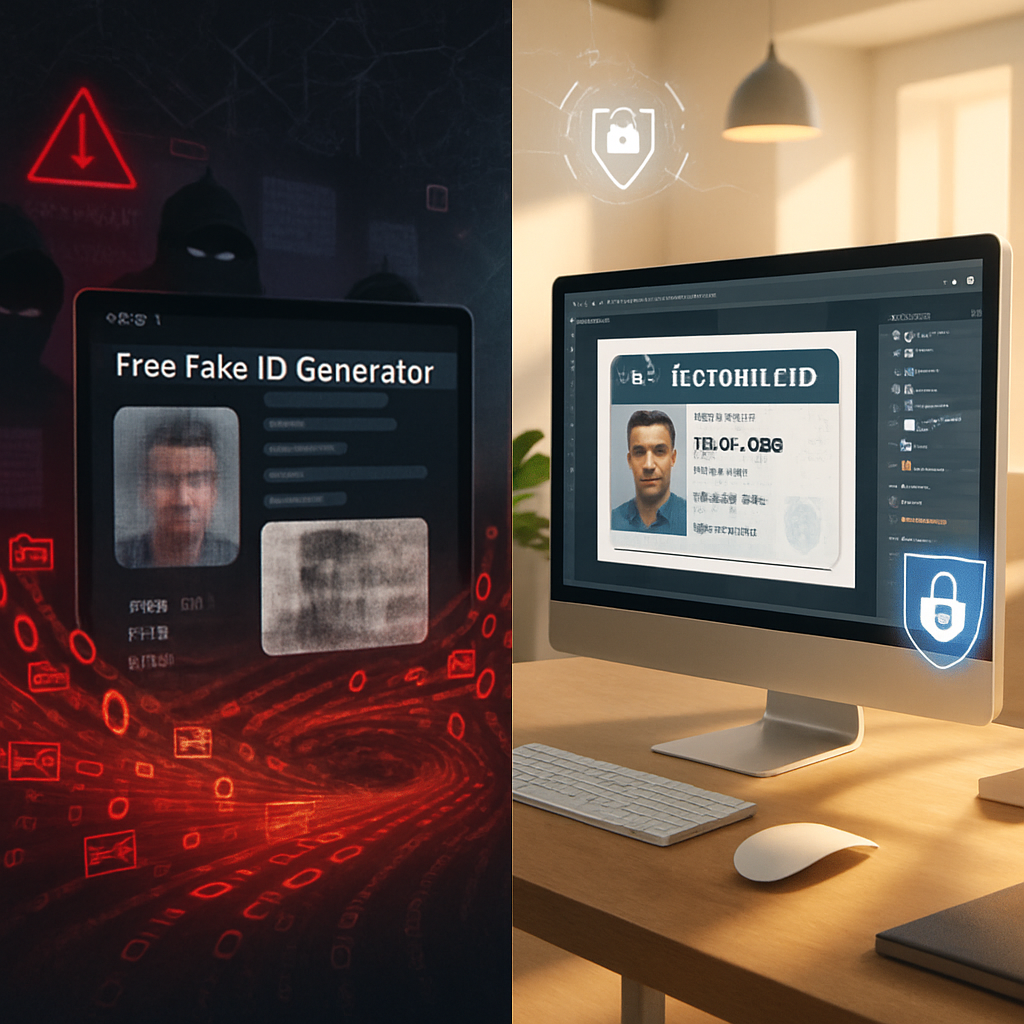
Are you aware of the hidden dangers when using free online fake ID generators? While such tools may promise quick results, they often come with significant fake ID generator risks including data theft and poor image quality that can undermine your design projects. Understanding these pitfalls is essential for anyone working with editable IDs or mockups.
This article explains why free fake ID generators pose privacy risks and how AI-generated fake IDs frequently suffer from low resolution and visible artifacts. We also highlight why paid PSD templates offer a safer, higher-quality alternative that protects your personal data while delivering professional-grade visuals. Let’s explore how choosing the right resources not only ensures cleaner, more consistent outputs but also minimizes exposure to security threats associated with fake ID generator data theft and image quality issues.
Next, we’ll compare AI-driven generators with paid PSD options to help you make informed decisions for your editable document projects. These templates are intended for design practice, mockups, and film props; they are not substitutes for official documents.
Understanding the risks of free online fake ID generators is crucial for anyone exploring editable IDs. This article highlights the data theft dangers and image quality problems linked to these tools while presenting paid PSD templates as a safer, privacy-focused solution.
- Recognize data theft threats: Free fake ID generators often collect and misuse personal information without user consent.
- Understand image quality drawbacks: AI-generated fake IDs typically suffer from low resolution and visible artifacts, affecting authenticity in design projects.
- Explore AI and deepfake roles: These technologies facilitate rapid fake ID creation but increase privacy and fraud risks.
- Identify privacy risks on fake ID sites: Many sites lack proper data protection, exposing users to identity theft and misuse.
- Favor paid PSD templates for security: Professionally crafted PSDs maintain high image quality and keep user data private.
- Hidden insight—prioritize privacy and quality: Unlike free generators, paid PSD templates address overlooked concerns by safeguarding user data while delivering superior visual fidelity.
- Answer common safety questions: Learn why free generators are unsafe and how PSDs provide a trustworthy alternative for your design needs.
Next, we’ll delve deeper into comparing AI-based generators with paid PSD templates and how to select secure, high-quality resources for your editable document projects. These templates are intended for design practice, mockups, and film props; they are not substitutes for official documents.
Understanding the Risks of Free Fake ID Generators
Data Theft Threats on Free Fake ID Platforms
Free fake ID generators often attract users due to their zero cost, but this convenience comes with significant risks. These platforms commonly require users to input sensitive personal data such as names, dates of birth, and sometimes even payment information. Since many operate without legitimate oversight or privacy safeguards, the collected data can be harvested for malicious purposes like identity theft or unauthorized financial transactions. Users should remain cautious about the types and amount of data they share on these sites.
Privacy Risks Associated with Fake ID Websites
Many free fake ID websites lack robust security infrastructure such as SSL encryption, leaving data transmissions vulnerable to interception. Furthermore, server security is often inadequate, making stored user data prime targets for breaches. Due to these lapses, users’ information can be exposed not just to the platform owners but also to third parties involved in data resale or cyberattacks. Without transparent privacy policies, it is impossible to verify if or how data is protected, heightening the risk of long-term privacy violations.
Why Free Generators Lack Transparency and Security
Legitimate websites provide clear, consumer-friendly privacy policies and terms of service explaining data handling. Conversely, free fake ID generators typically omit these critical disclosures, eroding user trust and increasing exposure to hidden risks. Their operations often rely on dubious monetization methods such as data mining or embedded malware, making the lack of transparency a serious concern. This opaqueness underscores why avoiding free fake ID sites is prudent for protecting personal security.
The risks inherent to free fake ID generators become even more pronounced when considering advances in AI and deepfake technology, which have transformed the landscape of fake identification creation.
The Impact of AI and Deepfake Technology on Fake ID Creation
How AI Accelerates Fake ID Production
Artificial intelligence has drastically increased the speed and volume at which fake IDs can be generated. AI-driven design tools automate the creation of document layouts, photo substitution, and text insertion with minimal human intervention. This automation lowers the barrier to creating seemingly realistic IDs, making it difficult for casual observers and some verification systems to detect forgeries. The scale and speed offered by AI necessitate stronger scrutiny and better-quality templates for legitimate design and mockup work.
Deepfake Identity Fraud and Its Implications
Deepfake technology synthesizes realistic images and videos of faces that can be inserted into ID templates, increasing the sophistication of fraudulent documents. The combination of AI and deepfake tools poses greater challenges in verifying authenticity, as facial features on IDs can be convincingly altered or replaced. This creates ethical concerns around misuse and compels designers to rely on secure and well-crafted PSD templates with rigid edit controls to prevent unintended replication for fraudulent purposes.
Despite the technological sophistication involved in AI-generated fake IDs, these documents frequently suffer from quality issues that impact their usefulness in professional design contexts.
Image Quality Issues in AI-Generated Fake IDs
Common Visual Artifacts and Resolution Limitations
AI-generated fake IDs often exhibit visual flaws including pixelation, blurriness, inconsistent lighting, and unnatural color gradients. These artifacts stem from resolution constraints and generative model distortions that artificial intelligence methods struggle to eliminate fully. This hampers the realistic appearance critical for high-quality mockups or editable documents. Recognizing these common pitfalls helps designers avoid substandard sources and prioritize quality.
Effects on Design Projects and Visual Fidelity
For professional presentations, marketing mockups, or template previews, poor image resolution and artifacts severely degrade visual fidelity. Blurred text and distorted photos reduce viewer confidence and can misrepresent the final product’s quality. Designers relying on AI-generated images often spend additional time correcting these issues, which delays project timelines. Using high-resolution paid PSD templates with well-layered edits ensures consistent quality and saves substantial rework effort.
Given these considerable challenges, investing in paid PSD templates is a more reliable alternative for editable document design projects.
Paid PSD Templates: A Safer and Higher-Quality Alternative
Advantages of Professionally Crafted PSD Templates
Paid PSD templates come professionally designed with attention to fine detail, ensuring crisp, high-resolution elements suitable for diverse uses like mockups or presentations. They feature well-organized, named layers separating text, images, backgrounds, and logos. This layer structure enables quick, non-destructive edits and reuse across multiple projects. Templates often follow standardized layouts that maintain visual balance and alignment, accelerating customization while guaranteeing consistent output quality.
How Paid PSDs Protect User Data and Privacy
By sourcing paid PSD templates from reputable vendors, users benefit from clear privacy policies and secure download platforms. These providers typically do not collect unnecessary personal data, minimizing exposure to theft or misuse. Additionally, established template sellers offer support and updates, creating a trustworthy environment for design work. Users gain peace of mind that their information remains confidential, which contrasts sharply with the opacity of free fake ID generator sites.
- Browse trusted collections of editable document templates at BlankDocs Shop
Selecting Secure PSD Templates for Editable Document Projects
When evaluating PSD templates, prioritize sources that demonstrate clear authenticity, regularly update their products, and provide previews or sample files. Review user feedback to assess reliability and template robustness. Verify that the template supports common editing software versions and includes well-documented layer names and editable objects. Ensuring alignment with your design goals and ethical standards will foster efficient, professional results with minimal risk.
Alongside opting for paid templates, understanding the legal and ethical use of editable documents is essential to responsible creation and application.
Legal & Ethical Use
- Templates and tools discussed are intended solely for design practice, mockups, film props, and educational purposes.
- They are not replacements for official documents and should not be used for identity fraud or unlawful activities.
- Users must comply with relevant laws and use editable documents responsibly and ethically.
To further address concerns designers and users often have, the following section clarifies frequently asked questions related to fake ID risks and PSD templates.
Common Questions About Fake ID Generator Risks and PSD Templates
Are Free Online Fake ID Generators Safe to Use?
Free fake ID generators pose significant security and privacy risks due to data harvesting, lack of encryption, and generally dubious operations. The lack of transparency regarding data usage and potential inclusion of malware make them unsafe. Instead, professionals and hobbyists should avoid these generators and opt for legitimate editable document templates from trusted vendors.
How Do Fake ID Generators Steal Data?
These generators typically collect data via forms requesting sensitive information, which is then stored insecurely or sold to third parties. Some websites embed tracking scripts or hidden malware to gather additional data beyond what the user knowingly submits. This unregulated data collection can lead to identity theft or financial fraud if exploited by malicious actors.
Why Use Paid PSD Fake ID Templates Instead of Generators?
Paid PSD templates guarantee higher image quality, editable layers, and a secure transaction process that respects user privacy. Unlike generators, they provide clear licensing terms, support, and predictable customization workflows. This enables consistent, professional results while mitigating the risks of data breaches or substandard output.
- Explore specific PSD offerings like the Blank India Registration Certificate Template for professional editable documents.
To conclude, adopting best practices during the use of editable document templates not only enhances output quality but also protects user privacy and legal standing.
Best Practices for Using Editable Document Templates Safely
Maintaining Data Privacy While Working with Editable IDs
Always download templates from reputable sources with secure HTTPS connections to avoid interception. Avoid uploading real personal data into editable templates unless necessary for legitimate mockups, and consider using anonymized or placeholder data instead. Regularly update your design software to patch vulnerabilities and use antivirus tools to detect suspicious files. These steps collectively help preserve your digital privacy during template editing.
Ensuring High-Quality Outputs in Design and Mockups
Start by verifying the resolution and canvas size of templates before editing to match your project needs. Maintain original layer structures and avoid flattening images prematurely to preserve editability. Pay close attention to locale-specific settings such as date formats and currency symbols to ensure the document looks authentic in context. When exporting to PDF or other formats, select high-quality options and check for any compression artifacts that might degrade visual fidelity.
- Access a variety of secure, high-quality templates such as the Blank Philippines Registration Authority Template.
Conclusion
Free fake ID generators may appear convenient but come with significant risks, including data theft, privacy vulnerabilities, and lack of transparency. These issues are compounded by the rapid advancements in AI and deepfake technologies, which escalate the complexity and potential misuse of editable documents. Low-quality outputs from AI-generated sources often degrade the professionalism and visual fidelity required for design and mockup projects.
In contrast, investing in high-quality paid PSD templates offers clear advantages: they provide well-structured, editable layers, superior resolution, and secure transactions that protect user privacy. Sourcing templates from reputable vendors ensures consistent results, reliable support, and compliance with ethical standards. These factors collectively streamline workflows, maintain design integrity, and reduce the risk of data exposure.
Moving forward, designers and users should prioritize secure, trusted editable document templates that balance efficiency with responsibility. By adopting best practices—such as verifying template quality, respecting legal frameworks, and safeguarding personal information—creative professionals can uphold both the quality and security of their projects while adapting to evolving technologies.
- Discover dependable editable document resources at BlankDocs Shop